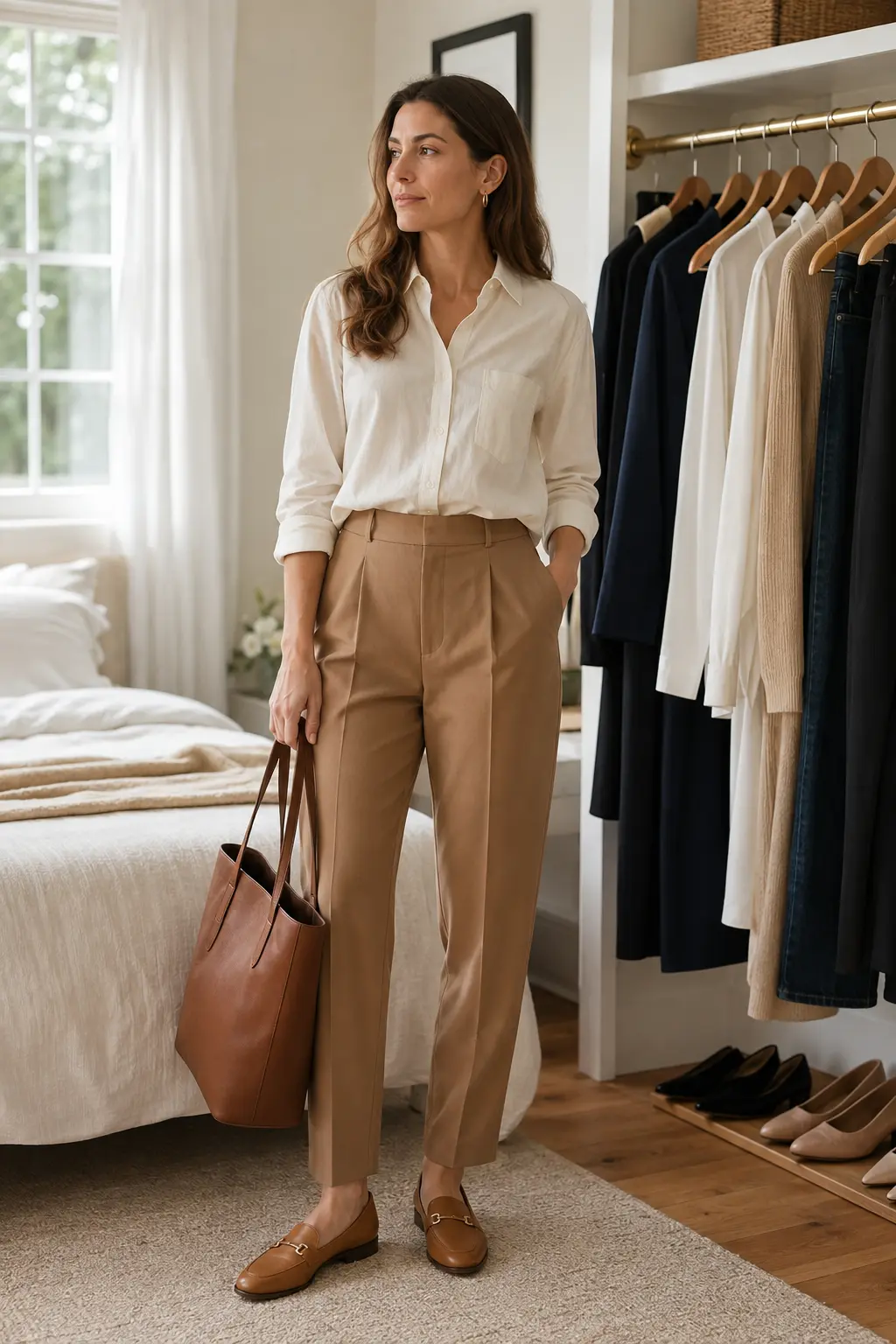
Building a capsule wardrobe women can wear in real life starts with their routines, not a fixed number of clothes. The goal is to keep a smaller collection of garments that work together, fit comfortably, and suit the places you actually go.
This guide will help you review what you own, choose a practical color palette, select useful core pieces, and create repeatable outfits. You can build it gradually, use affordable clothing, and adapt every suggestion for your climate, dress code, body, and personal style. A good capsule should make getting dressed simpler without making your wardrobe feel restrictive.
Step 1: Review Your Current Wardrobe
Begin by taking out the clothes you wear during the current season. Separate them into four groups: regular favorites, occasional pieces, items requiring repair, and clothes you no longer enjoy wearing.
Pay attention to why your favorites work. They may have a comfortable fabric, a reliable fit, an easy color, or the right level of formality for your day.
- Keep garments that fit your present life and feel good for several hours.
- Set aside damaged pieces that you genuinely plan to repair.
- Store special-event clothing outside the everyday capsule.
- Donate, sell, or recycle unsuitable items when you are ready.
Do not remove clothing only because it fails a minimalist rule. This first review is about identifying useful patterns, not reaching the smallest possible total.

Step 2: Match the Capsule to Your Routine
Write down how you spend a typical two-week period. Count workdays, relaxed days, social plans, exercise, religious or community occasions, and any regular travel.
Your clothing balance should reflect that schedule. Someone working from home may use more soft trousers and washable tops, while an office wardrobe may rely on tailored trousers, shirts, knitwear, and polished flats.
Weather matters too. Choose breathable cotton, linen, or light viscose for hot conditions. In cooler months, add wool, sturdy denim, warm knits, and a practical outer layer.
Set a flexible target rather than copying a strict online formula. Around 20 to 35 everyday garments can be a helpful starting range, but laundry frequency, climate, and lifestyle may call for more or fewer pieces.
Step 3: Choose a Practical Color Palette
Select two or three base colors that already appear in your favorite clothes. Navy, black, charcoal, beige, brown, cream, and white are common options, but olive, burgundy, or another preferred shade can also act as a base.
Add two or three accent colors for personality. Soft blue, sage, rust, blush, or red can appear in tops, scarves, skirts, or knitwear.
Before keeping or buying a garment, imagine at least three combinations with pieces already selected. A striped shirt, for example, might work with jeans, navy trousers, and a beige skirt.
Step 4: Select Reliable Core Pieces
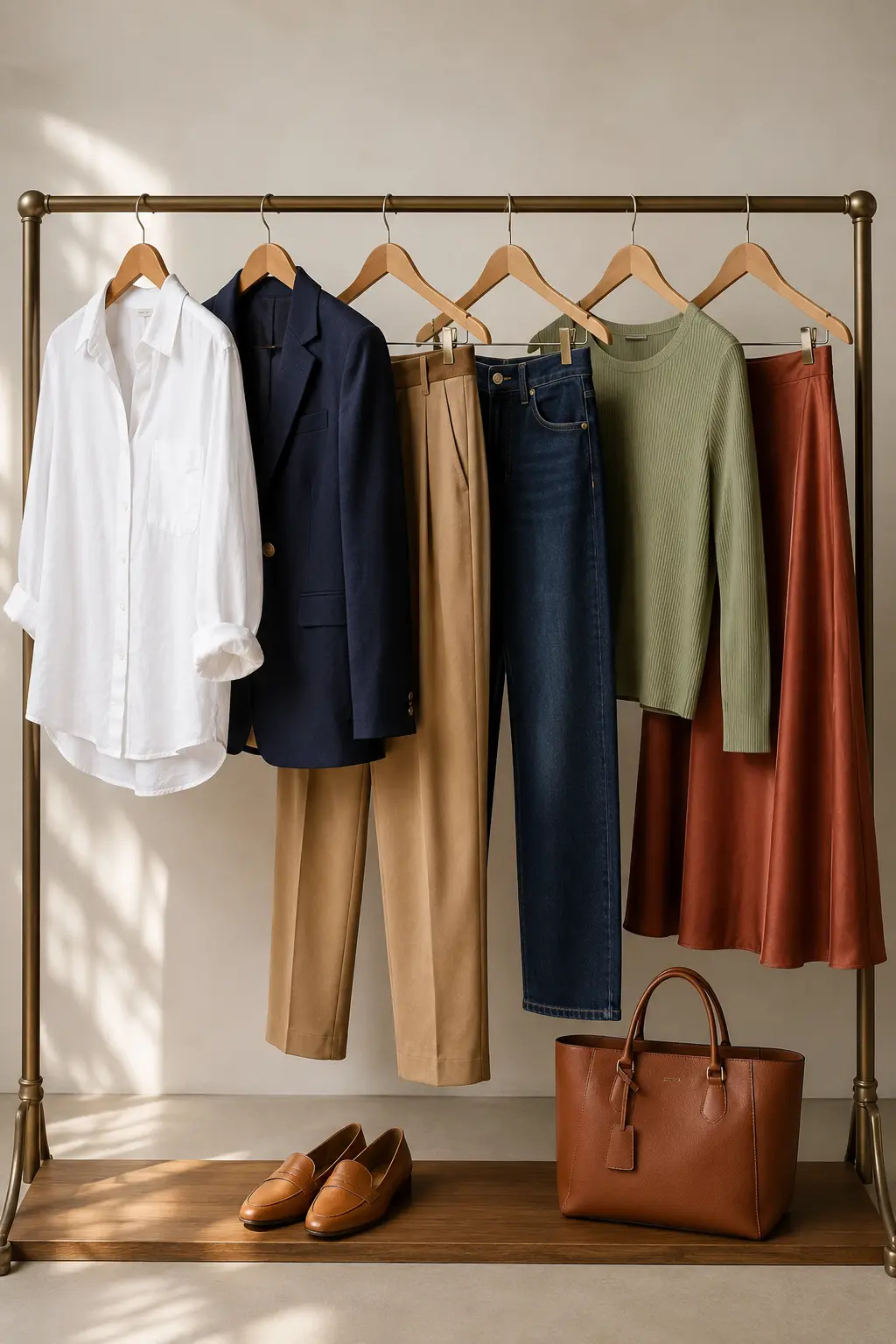
Build around garments that cover your most frequent activities. Start with the categories you wear often and add only what supports several outfits.
A practical female capsule wardrobe might include:
- Two or three comfortable bottoms, such as straight jeans, tailored trousers, or a midi skirt.
- Four to six tops in varied fabrics and sleeve lengths.
- Two layering pieces, such as a cardigan, blazer, overshirt, or lightweight jacket.
- One or two simple dresses or coordinated sets if you enjoy wearing them.
- Two or three pairs of shoes suited to your routine and weather.
Choose cuts that you already like wearing. A crew-neck T-shirt is not automatically useful if you prefer loose shirts, and a blazer has little value if your days are very casual.
Affordable substitutions work well. A neat cotton overshirt can replace a blazer, dark trainers can replace loafers, and a simple knit dress can cover both relaxed and polished occasions through different accessories.
Step 5: Create Repeatable Outfit Formulas
An outfit formula is a simple combination you can repeat with different colors or fabrics. It helps a small wardrobe produce more looks without constant shopping.
Try formulas such as:
- Straight trousers + fitted top + open shirt + loafers.
- Jeans + cotton shirt + cardigan + trainers.
- Midi skirt + tucked T-shirt + lightweight jacket + flats.
- Simple dress + belt + sandals or ankle boots.
Photograph combinations you like and keep them in a phone album. Test each outfit while sitting, walking, and reaching so you know it works beyond the mirror.

Step 6: Fill Gaps Slowly and Intentionally
Wear the edited wardrobe for two to four weeks before buying anything. Keep a short note of moments when a missing item actually prevents you from forming a suitable outfit.
Rank genuine gaps by frequency. A comfortable work shoe used three times each week deserves priority over a statement jacket reserved for an imagined event.
Shop with the garment name, preferred color, fabric, and spending limit written down. Secondhand shops, clothing swaps, alterations, and careful repairs can fill gaps without a large budget.
Check that each possible purchase works with at least three existing pieces. Also examine comfort, care instructions, transparency, pocket placement, and how the fabric behaves after movement.
Step 7: Maintain and Adjust the Wardrobe
Review the capsule at the end of each season. Notice which pieces were worn often, which stayed untouched, and where repeated discomfort appeared.
Move unsuitable seasonal garments into storage rather than keeping everything visible. Clean shoes, remove fabric pills, sew loose buttons, and follow garment-care labels so useful clothing lasts longer.

Your capsule can change when your work, climate, size, comfort preferences, or personal style changes. Replacing one category is more practical than rebuilding the entire collection.
Quick Styling Checklist
Before calling the capsule complete, check that:
- Most tops work with more than one bottom.
- Shoes cover your common activities and weather.
- Layers fit comfortably over the tops beneath them.
- Fabrics suit your laundry habits.
- Colors form several combinations you enjoy.
- Each garment fits your current body and routine.
- You have enough clothing between laundry days.
Conclusion
A useful capsule wardrobe begins with the clothes you already wear, then grows through careful editing and a few well-chosen additions. Review your routine, select compatible colors, keep reliable core garments, and build simple outfit formulas that remove guesswork from busy mornings.
There is no required garment count or universal checklist. Adapt every category to your climate, comfort, culture, budget, and preferred way of dressing. Start today by identifying five favorite pieces and writing down exactly why they work. Those details will guide the rest of your choices more accurately than a generic shopping list. Save this guide to your Pinterest wardrobe board so you can revisit the steps during your next closet review.