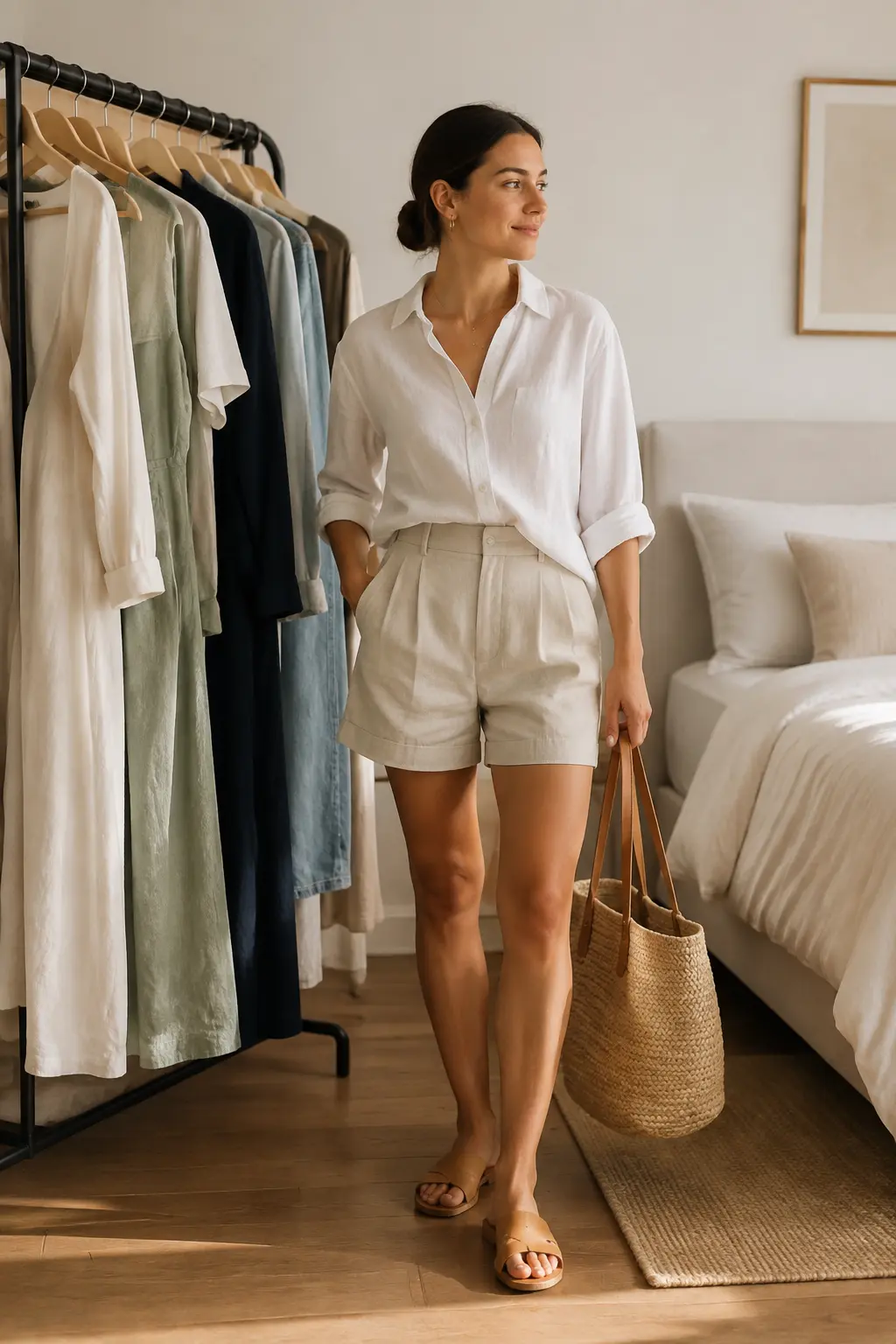
A summer capsule wardrobe makes hot-weather dressing simpler by giving you a small group of clothes that combine easily. Instead of buying a separate outfit for every plan, you can repeat breathable basics in different ways and change the mood through shoes, layers, and accessories.
The ideas below cover relaxed days, work, dinners, errands, and changeable weather. They use cotton, linen, light denim, and other comfortable fabrics, with practical substitutions for different budgets and coverage preferences. You do not have to copy every piece or follow a strict garment count. Start with the clothes you already reach for, then add only the options that fill a real gap in your routine.
1. Build a White, Beige, and Navy Foundation
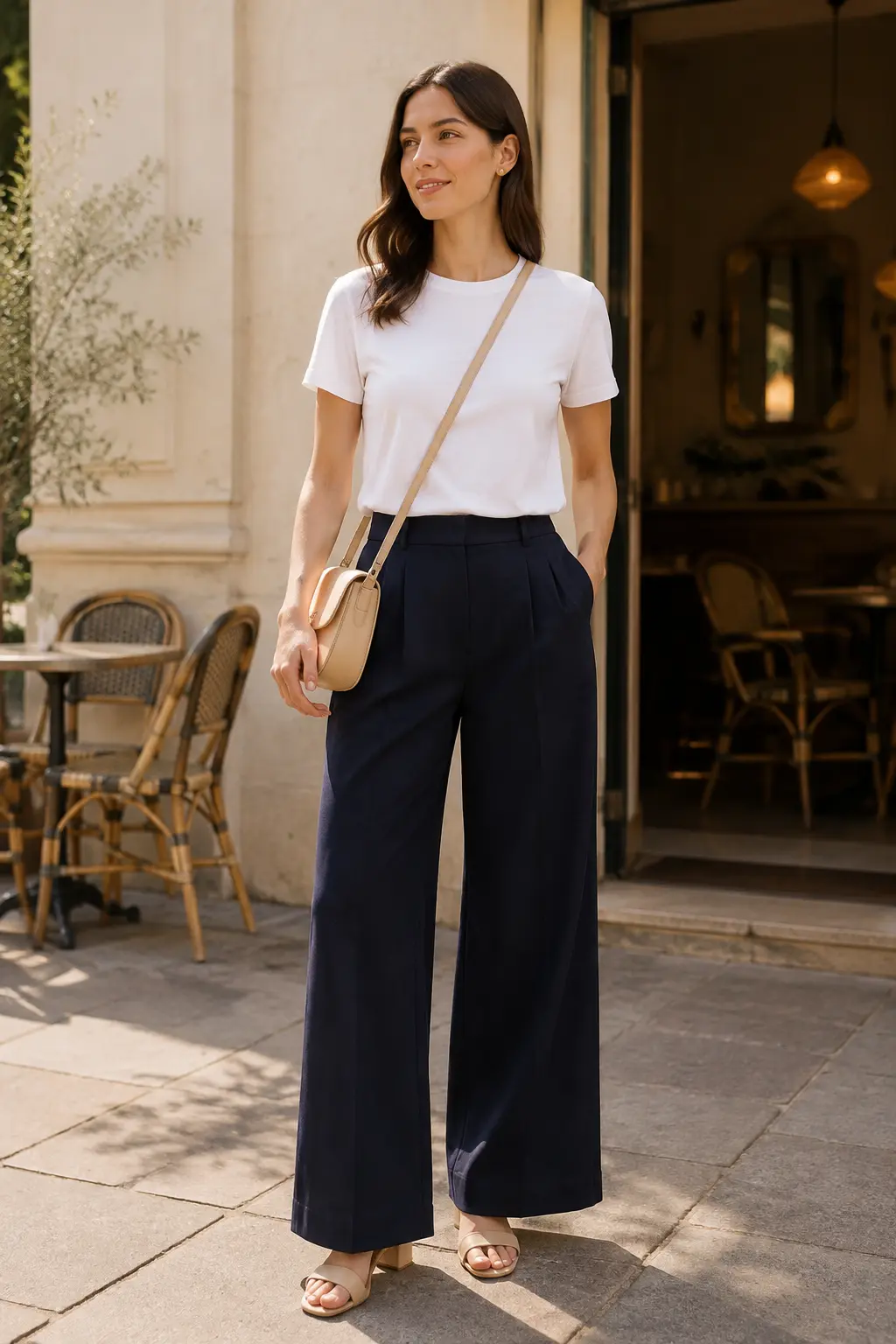
White, beige, and navy create an easy starting point because each shade pairs with the other two. Begin with a white cotton T-shirt, navy trousers, and beige sandals, then repeat the colors across shirts, shorts, skirts, and light layers.
The combination feels polished without requiring complicated styling. Navy gives depth, white keeps the outfit light, and beige softens the contrast for daytime wear.
Recreate it with pieces you already own before shopping. Dark blue jeans can stand in for navy trousers, while a cream top can replace bright white if that suits your coloring or laundry routine better.
For work, choose a tucked shirt and structured bag. For casual plans, wear an untucked tee, drawstring trousers, and canvas trainers. A scarf, belt, or small earring in one of the three shades keeps the outfit coordinated without making it overly matched.
2. Start with Breathable Straight-Leg Trousers
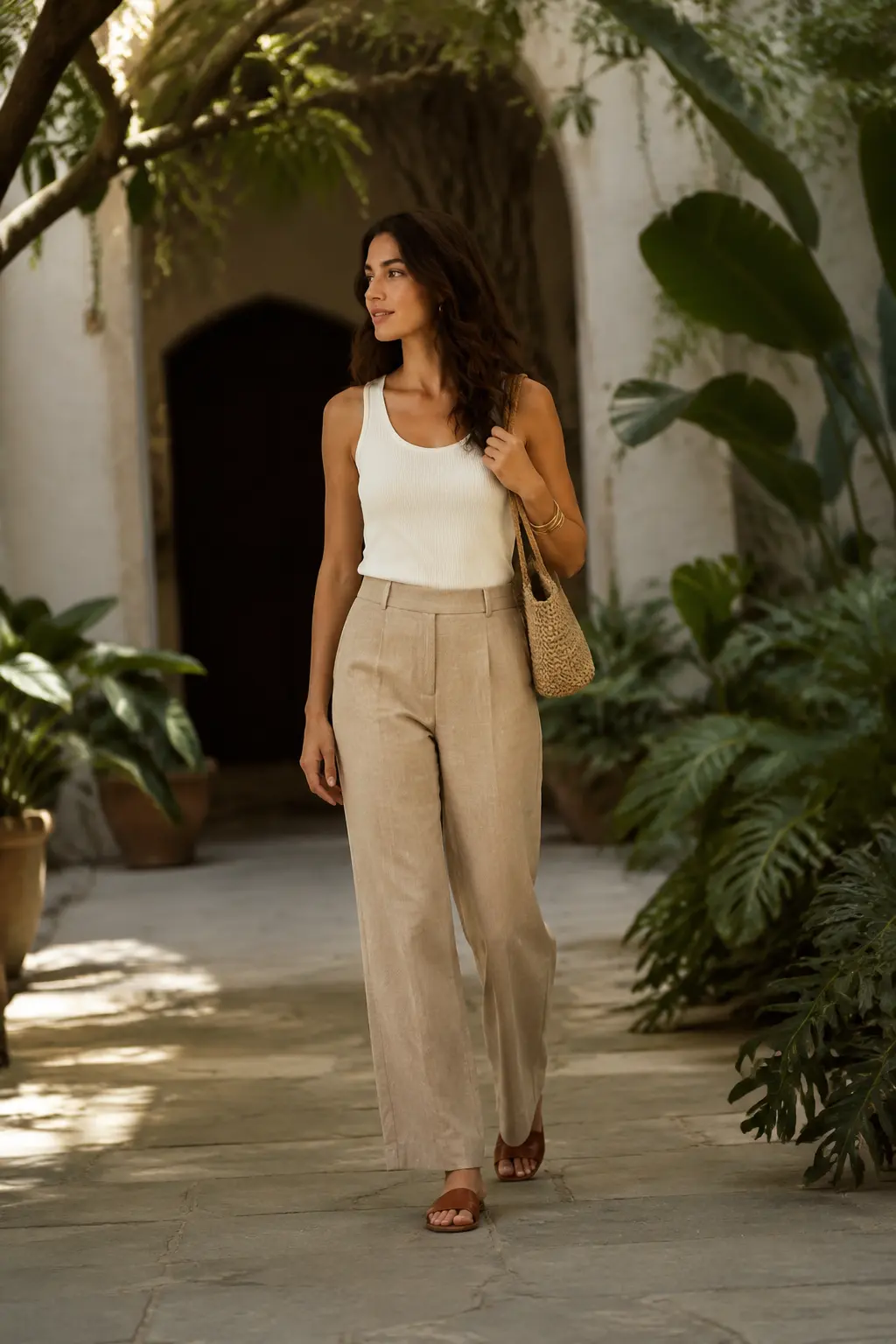
Straight-leg trousers in linen or a light cotton mix can cover errands, lunch, and casual offices. A mid-rise or high-rise cut works with tucked tanks, loose shirts, and short cardigans, giving one bottom several roles.
Choose a neutral shade that already matches your tops. Sand, olive, navy, chocolate, and soft gray are practical choices, while a subtle stripe can add interest without limiting combinations.
Look for enough room through the hip and thigh for sitting and walking comfortably. An elastic back or adjustable drawstring can make the fit more forgiving during long summer days.
If linen trousers feel expensive, check secondhand sections or choose lightweight cotton chinos. Hemming a longer thrifted pair can also improve the shape for a modest cost. Pair them with slides for relaxed wear, loafers for work, or clean trainers when you expect plenty of walking.
3. Use a White Linen Shirt as a Light Layer
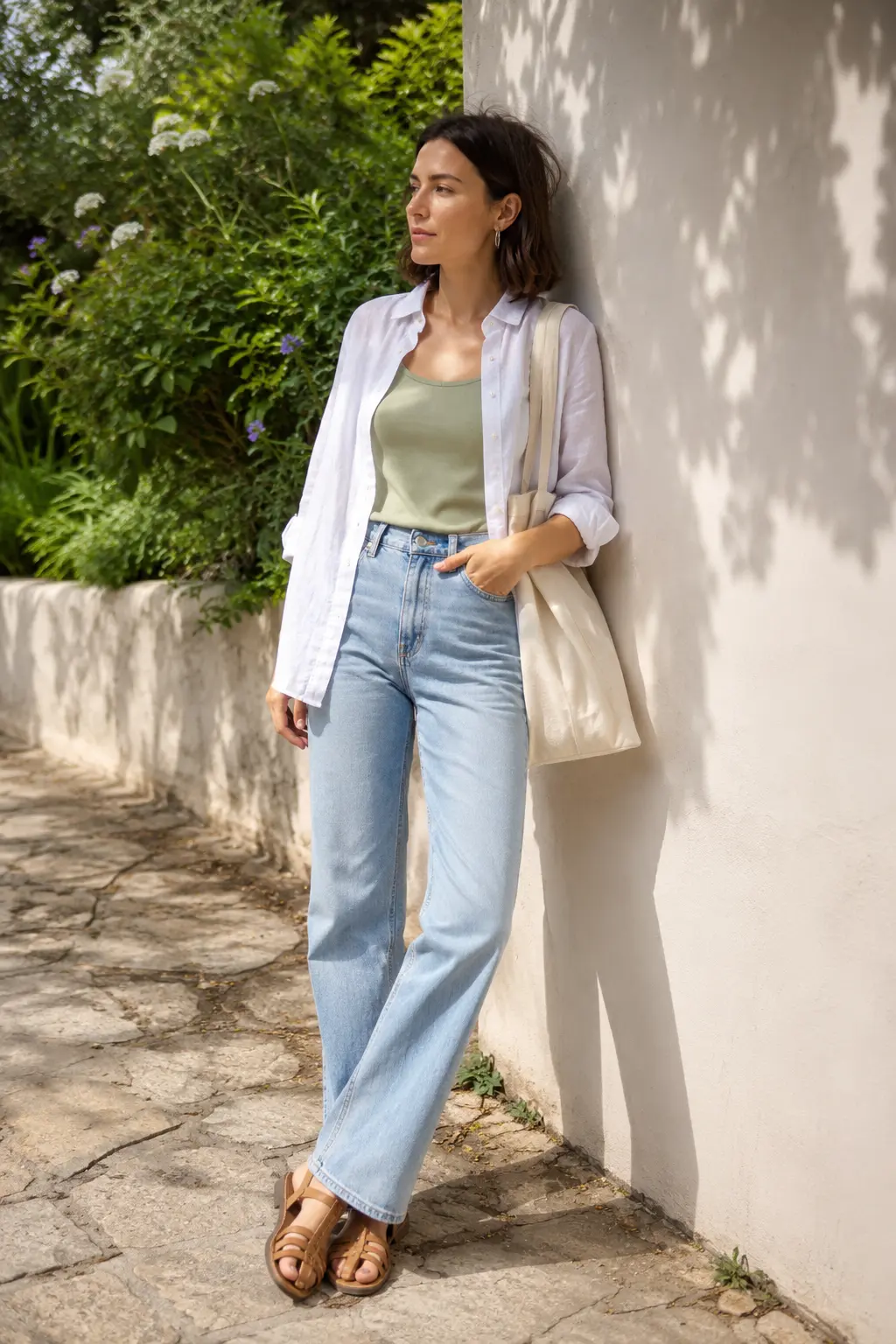
A white linen shirt can work as a top, a light jacket, or a beach cover-up. Wear it buttoned with tailored trousers, open over a tank and jeans, or tied loosely above a high-waisted skirt.
The slightly relaxed texture keeps repeated outfits from looking stiff. Roll the sleeves once or twice when it is warm, then lower them for sun coverage or a cooler evening.
Pure linen softens over time, but a linen-cotton mix usually wrinkles less and may cost less. A white cotton poplin shirt already in your closet can serve the same purpose, although it will look a little sharper.
For a modest option, choose a longer cut that falls below the hip and wear it over a sleeveless base. Check that the shirt remains comfortable across the shoulders when layered. Neutral buttons and minimal detailing will make it easier to combine with patterned bottoms and colorful accessories.
4. Add a Relaxed Cotton Midi Dress
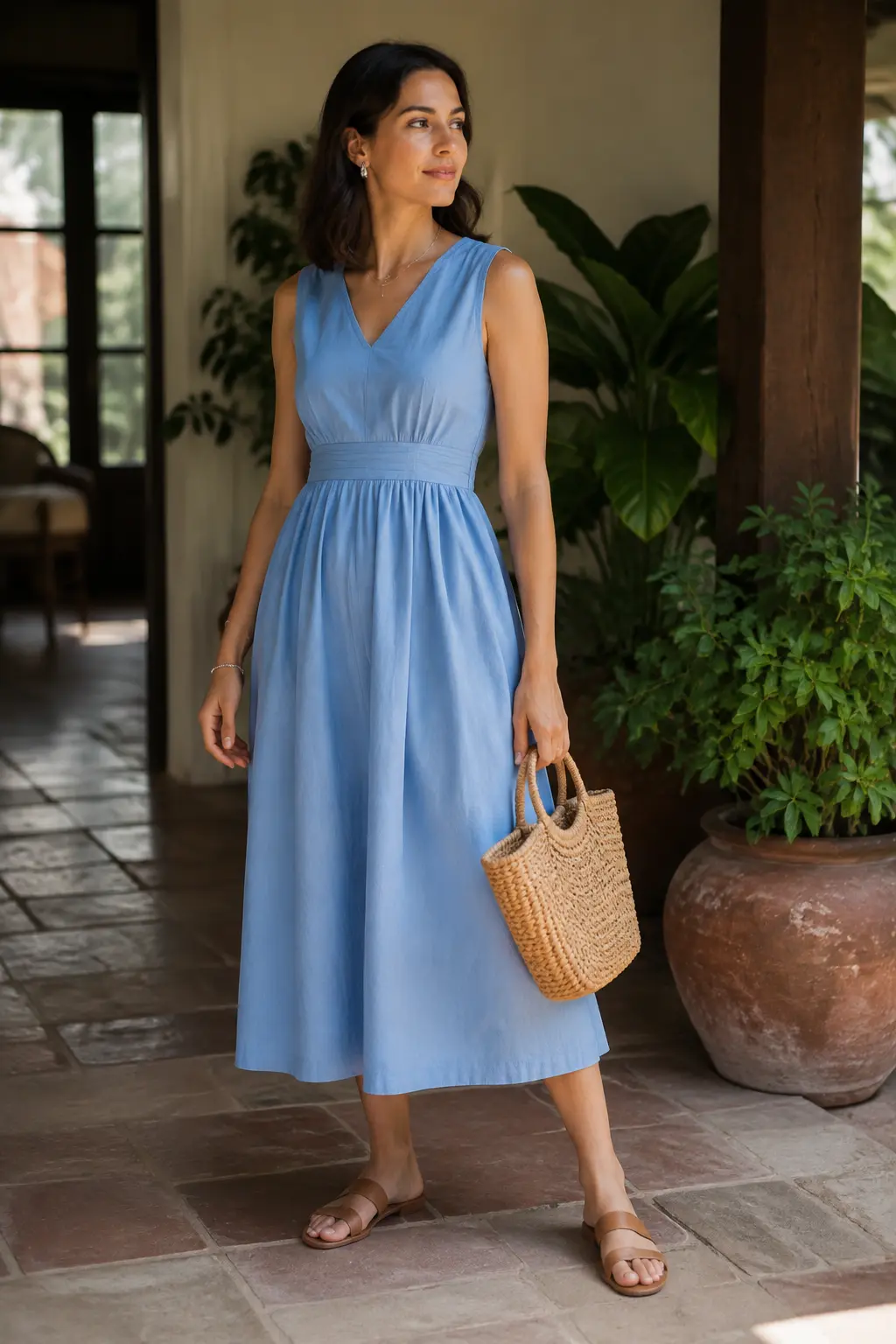
A cotton midi dress offers a complete outfit with very little planning. Pick a shape that allows comfortable movement and works with at least two pairs of shoes from your capsule.
A simple blue, black, olive, or rust dress can shift from daytime to dinner through styling. Flat sandals and a woven bag feel relaxed, while a slim belt, polished flats, and small earrings create a neater finish.
Choose breathable fabric and check the lining before buying. An unlined dress may feel cooler, but a light slip can help if the fabric becomes transparent in strong sunlight.
If sleeveless styles do not fit your preferences, look for short sleeves or layer a loose shirt on top. You can also wear a fitted tee under a strappy dress. A secondhand dress with a good fit can be shortened or have the straps adjusted, turning an inexpensive find into a regular summer piece.
5. Pair Tailored Shorts with Soft Tops
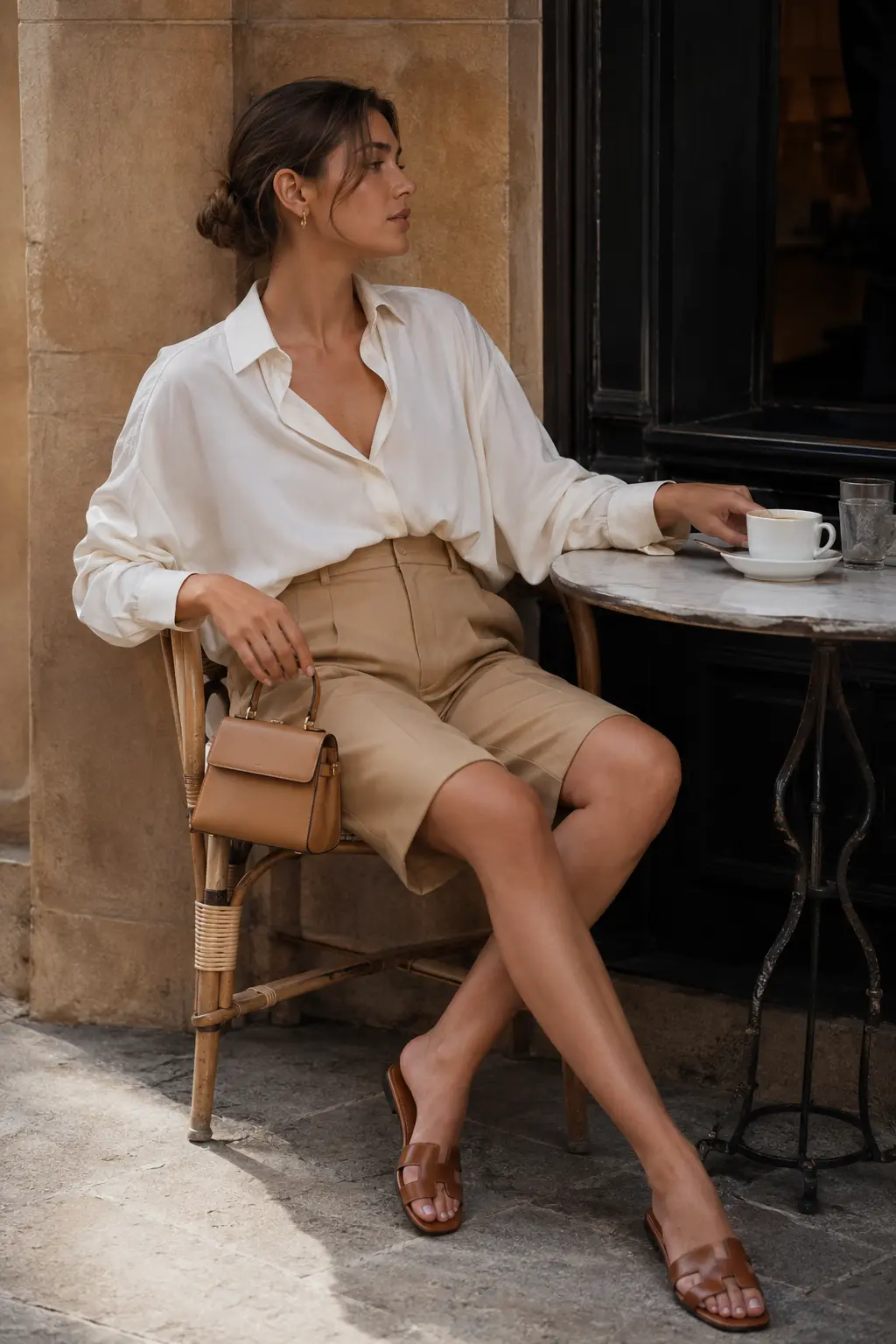
Tailored shorts sit between casual denim and formal trousers. A clean waistband, comfortable leg opening, and mid-thigh or longer hem can make them suitable for lunches, city walks, and relaxed workplaces.
Pair them with a soft blouse, linen shirt, fitted tee, or sleeveless knit. Keeping one element structured and the other relaxed gives the outfit balance without relying on tight clothing.
Camel, navy, black, and olive are easy to repeat. If shorts are not part of your wardrobe, use cropped trousers or a knee-length skirt with the same tops and shoes.
Thrifted trousers can sometimes be converted into shorts by a tailor, or carefully hemmed at home if you are comfortable sewing. Before cutting, test the planned length while sitting. Finish the look with flat sandals, loafers, or simple trainers, then add a small bag that leaves your hands free.
6. Keep One Light-Wash Denim Option
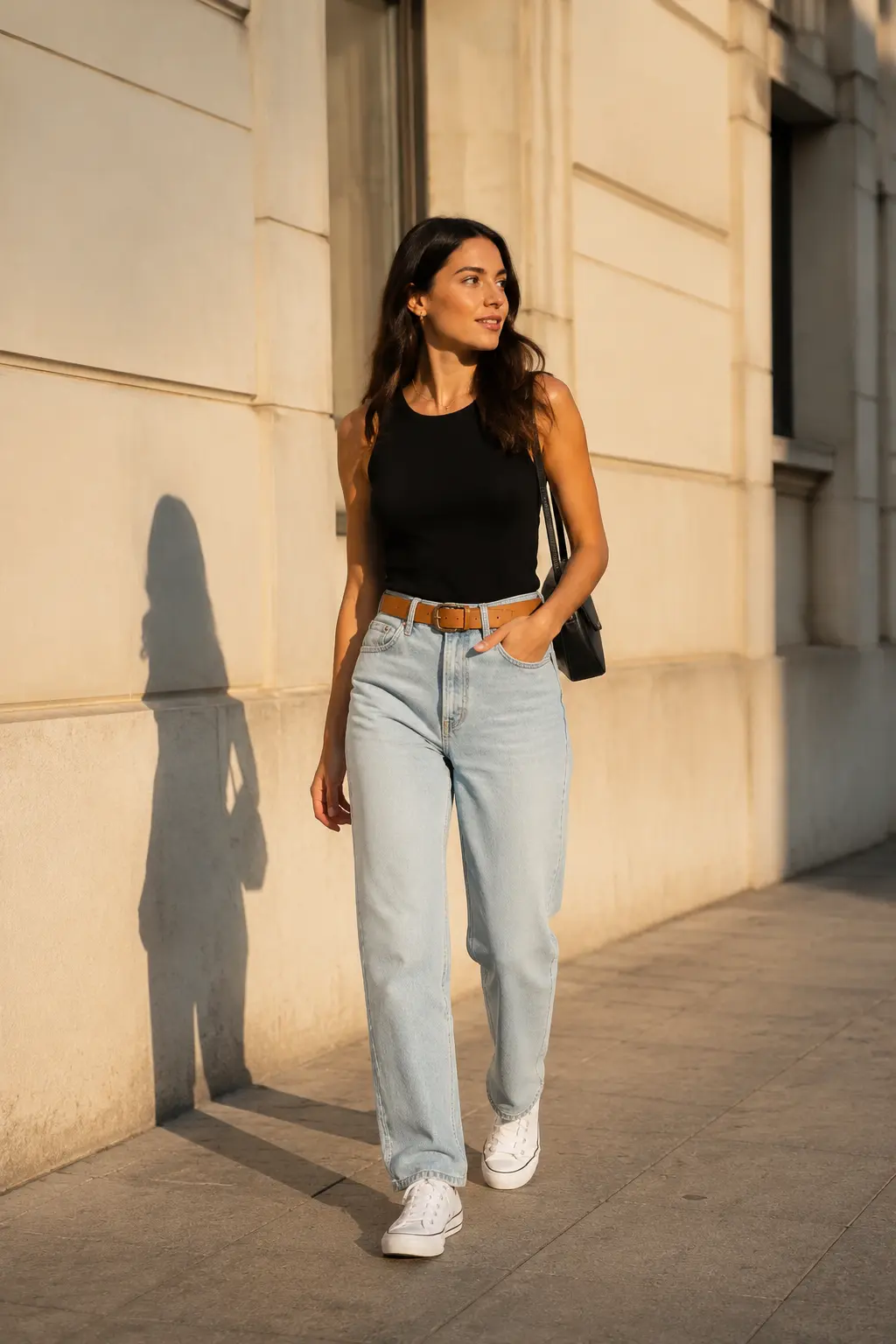
Light-wash denim gives a summer capsule a casual anchor for cooler days and evening plans. Straight jeans, a midi skirt, or relaxed denim shorts can all work, so choose the form you naturally wear most.
Pair light denim with white, black, navy, rust, or soft pastels. A black tank and white trainers create a clean contrast, while a linen shirt and sandals feel softer.
Heavy denim may feel uncomfortable in high heat. Look for a lighter fabric, looser cut, or cotton mix, and save it for air-conditioned spaces or days with lower temperatures.
There is no reason to buy new denim if an older pair already fits well. Cuff the hem for a cropped look, or have the length altered so it works with flat shoes. For greater coverage, combine a denim midi skirt with a breathable long-sleeve shirt and comfortable sandals.
7. Choose a Matching Linen Set
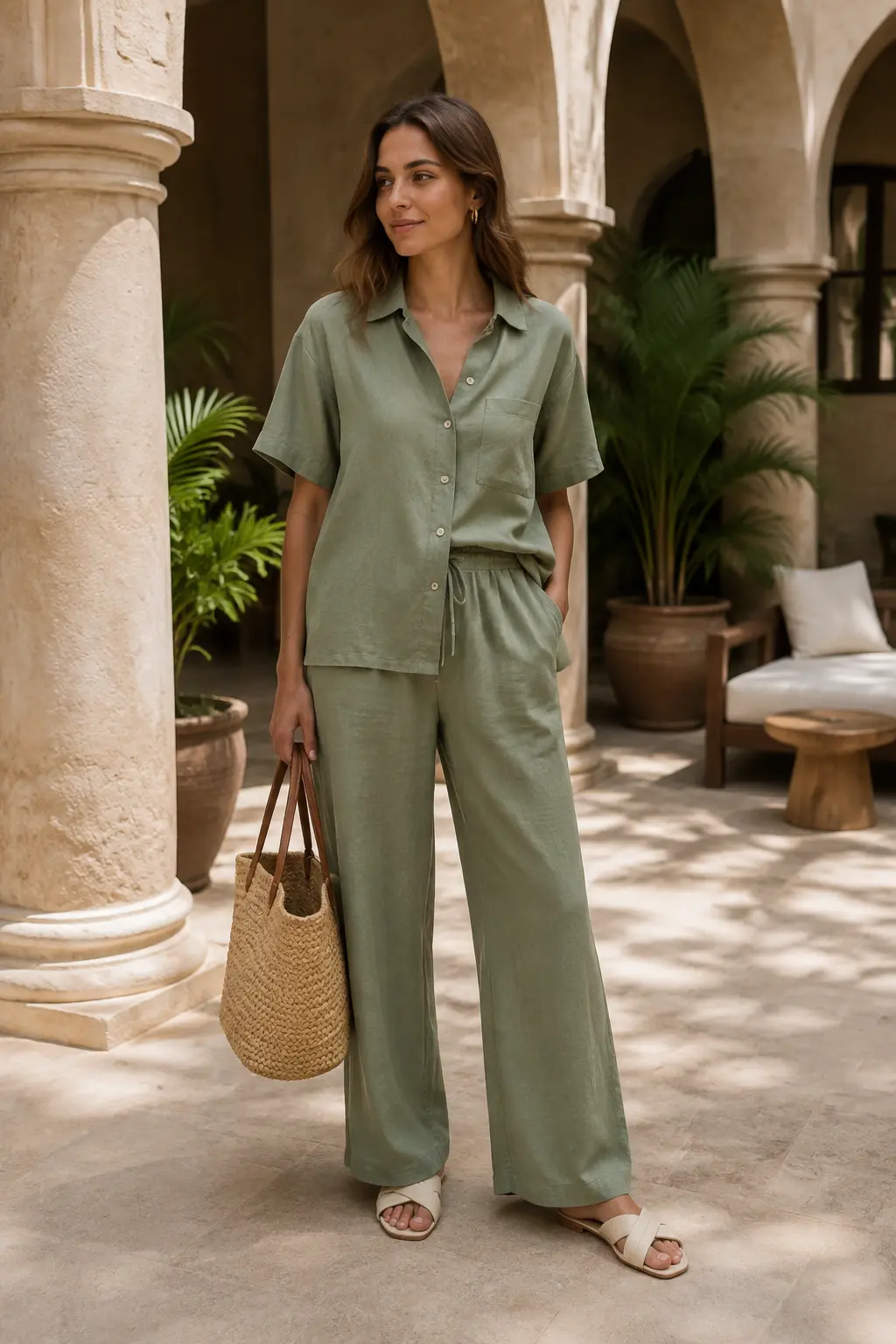
A matching linen shirt and trouser set gives you three outfits: both pieces together, the shirt with another bottom, and the trousers with another top. This makes a set especially useful in a compact wardrobe.
Choose a color that connects with your existing basics. Sage works with cream, navy, and tan, while rust pairs well with white, denim, and brown.
Wear the set loose with slides for a relaxed day. Tuck the shirt partially, add a belt, and switch to loafers when you want more structure. A camisole or fitted tee underneath lets you wear the shirt open.
You do not have to purchase both pieces from the same place. Separates in a close color can create a similar tonal effect, and secondhand linen shirts are often easy to find. Focus on compatible fabric weight rather than a perfect shade match.
8. Add a Simple A-Line Midi Skirt
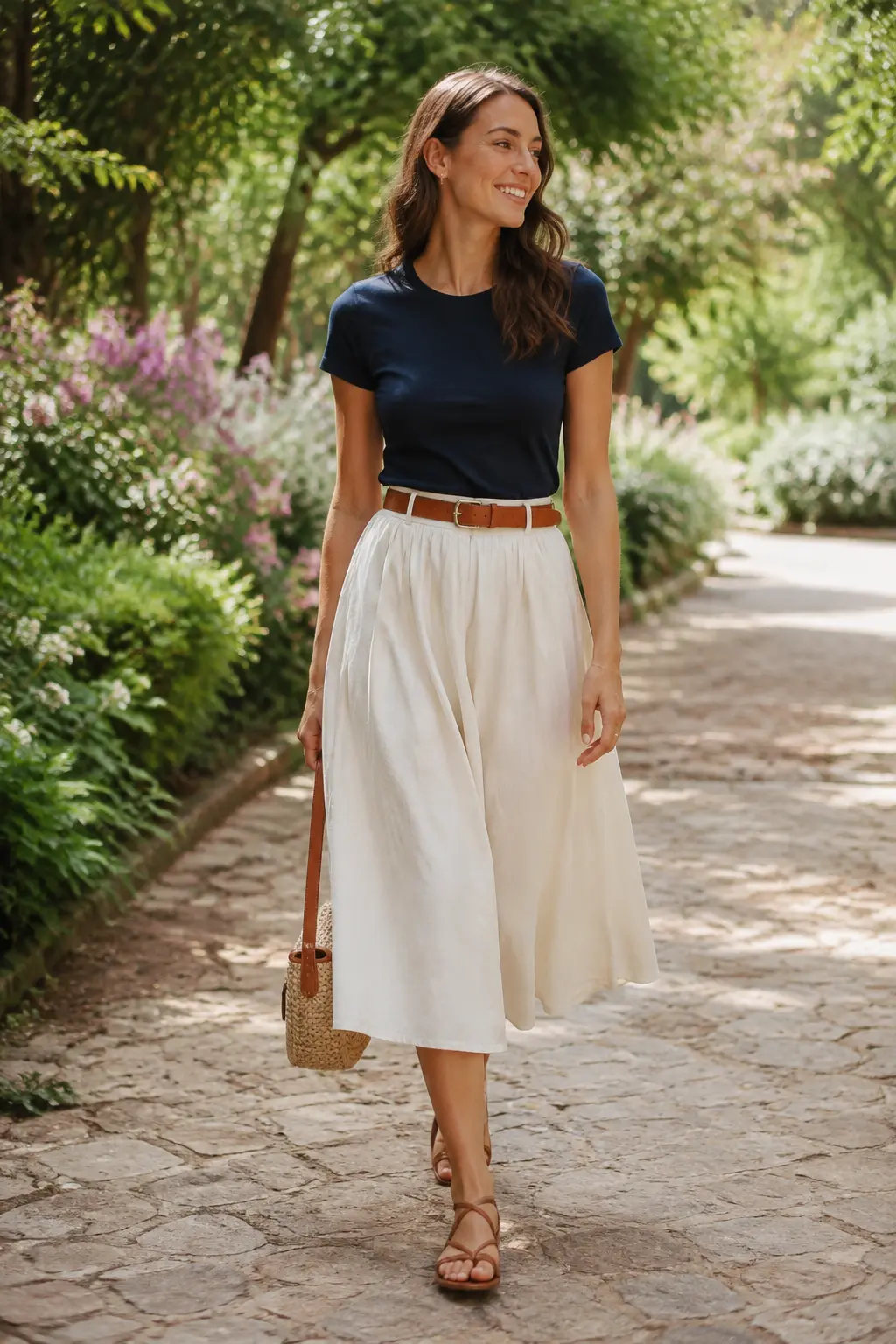
An A-line midi skirt offers airflow and works with several top shapes. A plain cream, navy, olive, or black version can pair with tees, tanks, shirts, and light knitwear.
Choose a waistband that remains comfortable after sitting and eating. Pockets are useful, while a partial elastic waist can improve wearability without changing the polished appearance.
Tuck a fitted tee for a defined waist, or wear a shorter loose shirt that meets the waistband. If you prefer more coverage, add a long-sleeve cotton top and flat closed shoes.
A skirt found secondhand can be shortened, and a missing belt can be replaced with a simple fabric tie. Check the fabric against sunlight and add a breathable slip if required. Sandals suit warm days, while white trainers make the same skirt practical for walking and casual plans.
9. Include a Polished Sleeveless Knit
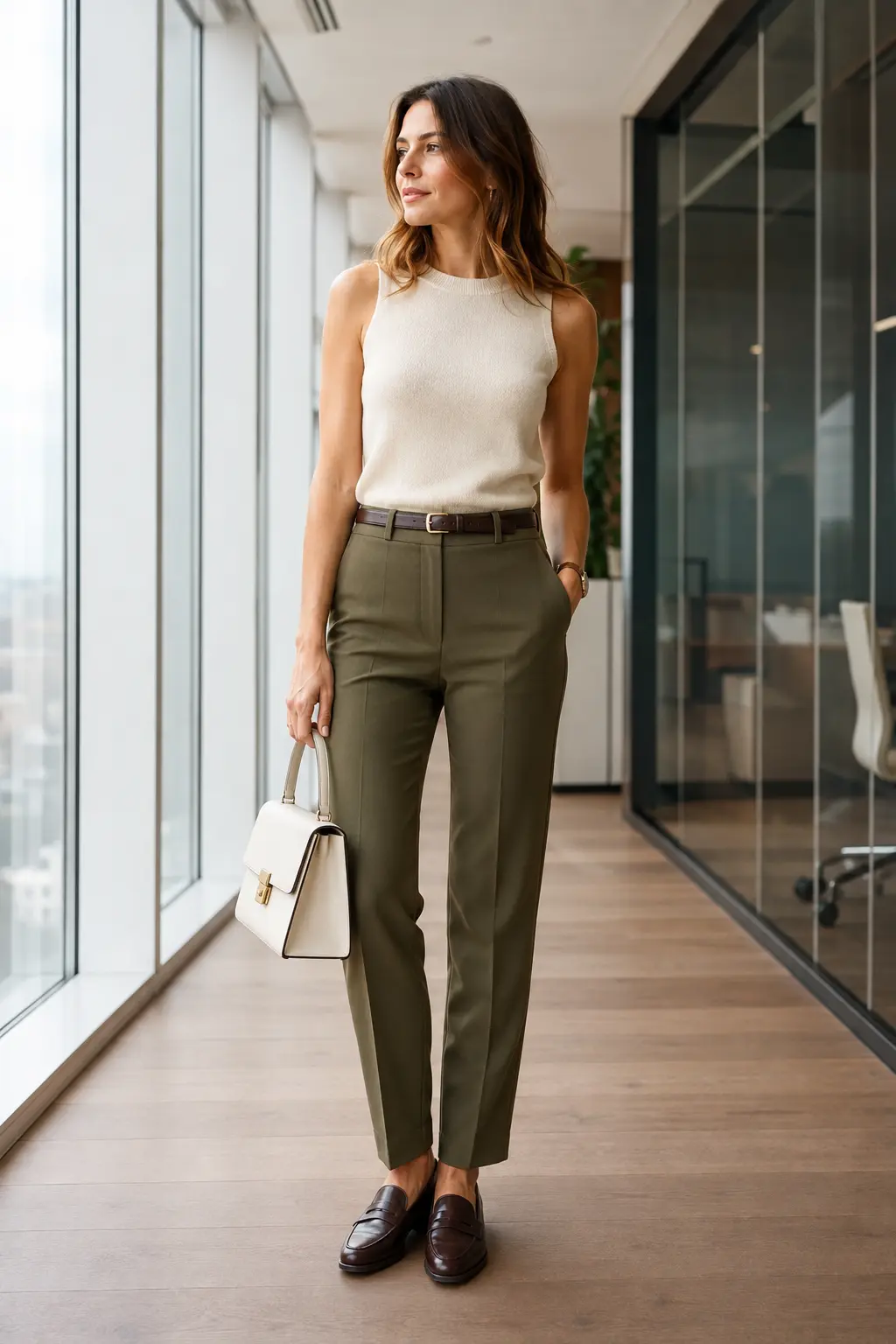
A fine sleeveless knit looks slightly more polished than a standard tank while remaining easy to layer. Wear it with tailored trousers for work, a midi skirt for dinner, or denim for a quiet weekend.
Cotton and lightweight viscose usually feel more comfortable than thick synthetic knits in heat. Test the armholes and neckline with your usual undergarments so the top feels secure throughout the day.
Ivory, black, navy, and chocolate combine easily, but a muted accent color can work if it already appears elsewhere in the capsule. Add a light shirt or cardigan in strongly air-conditioned spaces.
For an affordable option, use a fitted ribbed cotton tank with a higher neckline. A small alteration at the shoulder or side seam can improve a thrifted knit. Keep accessories restrained for work, then switch to a bolder earring or scarf for evening plans.
10. Use a Lightweight Blazer for Workdays
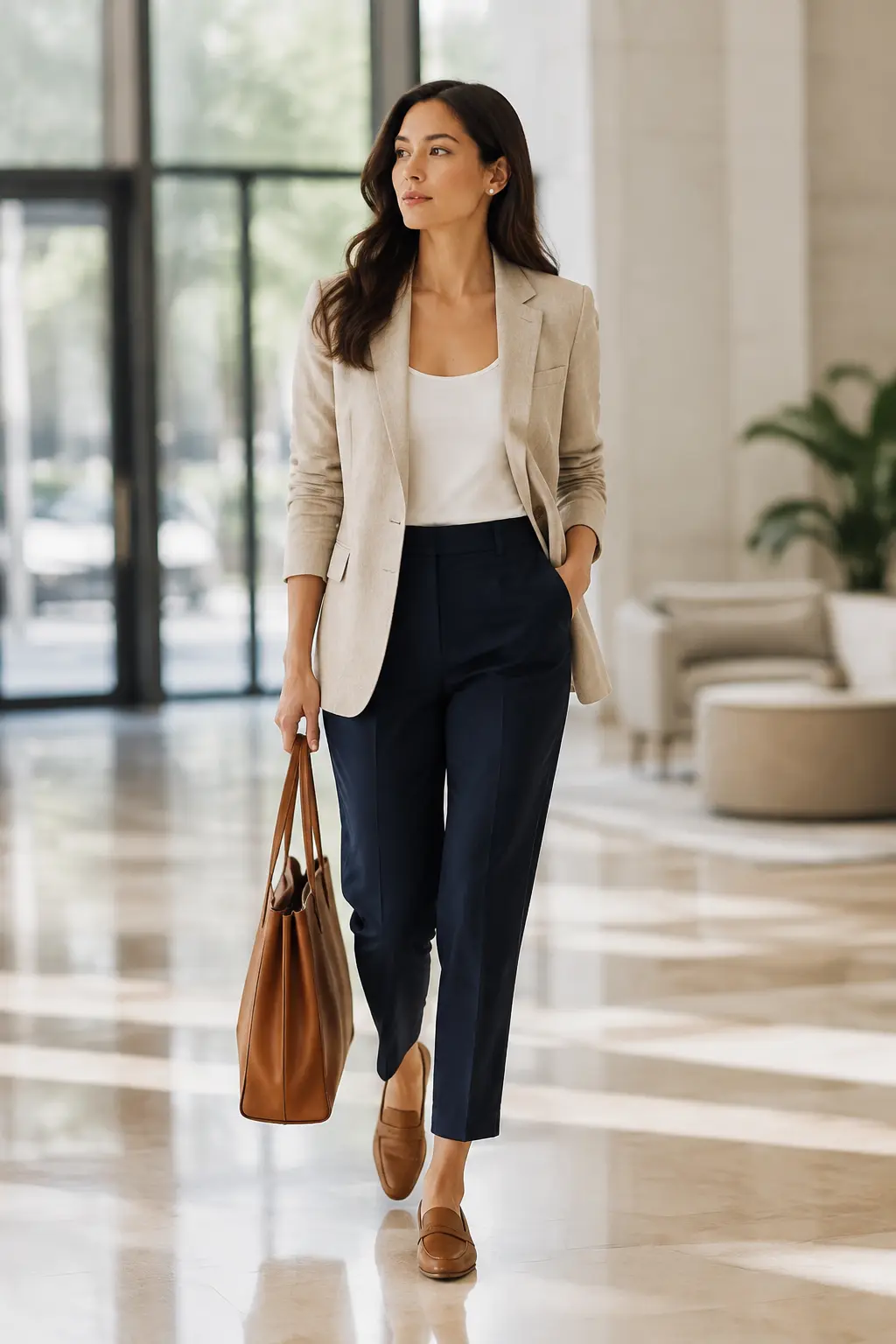
An unlined blazer can make summer basics suitable for meetings without adding the weight of a traditional jacket. Linen, cotton twill, or a light fabric mix works over tanks, tees, dresses, and sleeveless knits.
Beige, navy, or soft gray will connect with many capsule colors. Check that the sleeves move comfortably and that the blazer sits well both open and buttoned.
Wear it with ankle trousers and loafers for work, then place it over a midi dress for dinner. Push the sleeves slightly for a relaxed shape when the setting allows.
If a blazer feels too formal, use a neat overshirt in cotton or linen. Thrift stores often carry lightweight jackets that can be updated with simpler buttons or minor sleeve alterations. Carry the layer rather than wearing it outdoors during peak heat, then use it inside cooler buildings.
11. Create an All-White Outfit with Texture
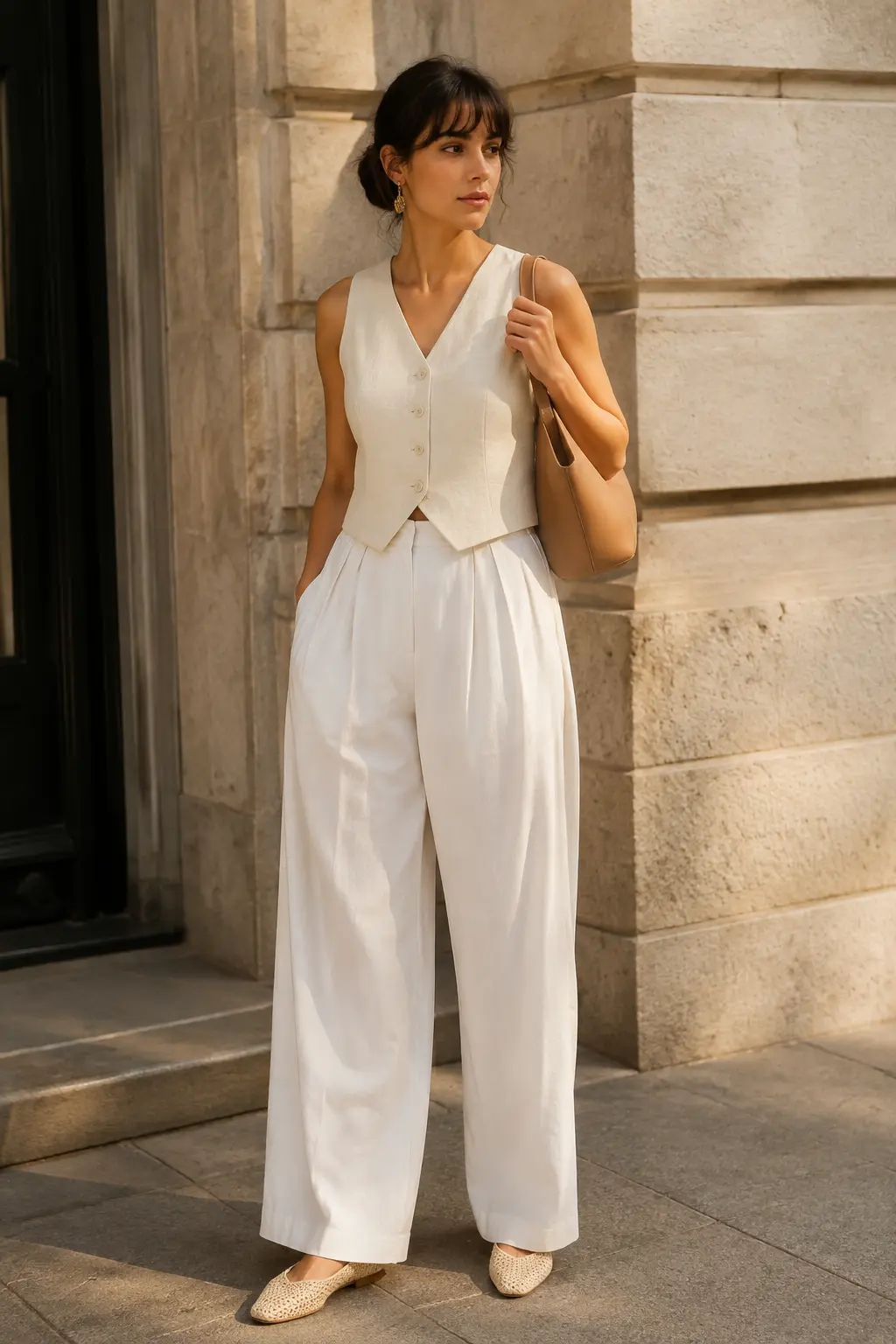
An all-white or cream outfit feels intentional when the fabrics have different textures. Pair a ribbed top with linen trousers, or a cotton shirt with a softly woven skirt.
The shades do not have to match perfectly. Ivory, cream, and soft white can sit together naturally, especially when a tan belt, bag, or shoe connects the pieces.
Choose washable garments if pale colors make you cautious. Check transparency in daylight and wear a suitable underlayer where helpful. A longer shirt or lined skirt can provide more coverage without changing the tonal idea.
This look is easy to recreate from basics rather than a purchased set. If white trousers are impractical for your routine, use a cream top with pale beige bottoms for a similar effect. Add brown sandals for daytime or woven flats for a polished indoor event.
12. Mix a Striped Top with Solid Basics
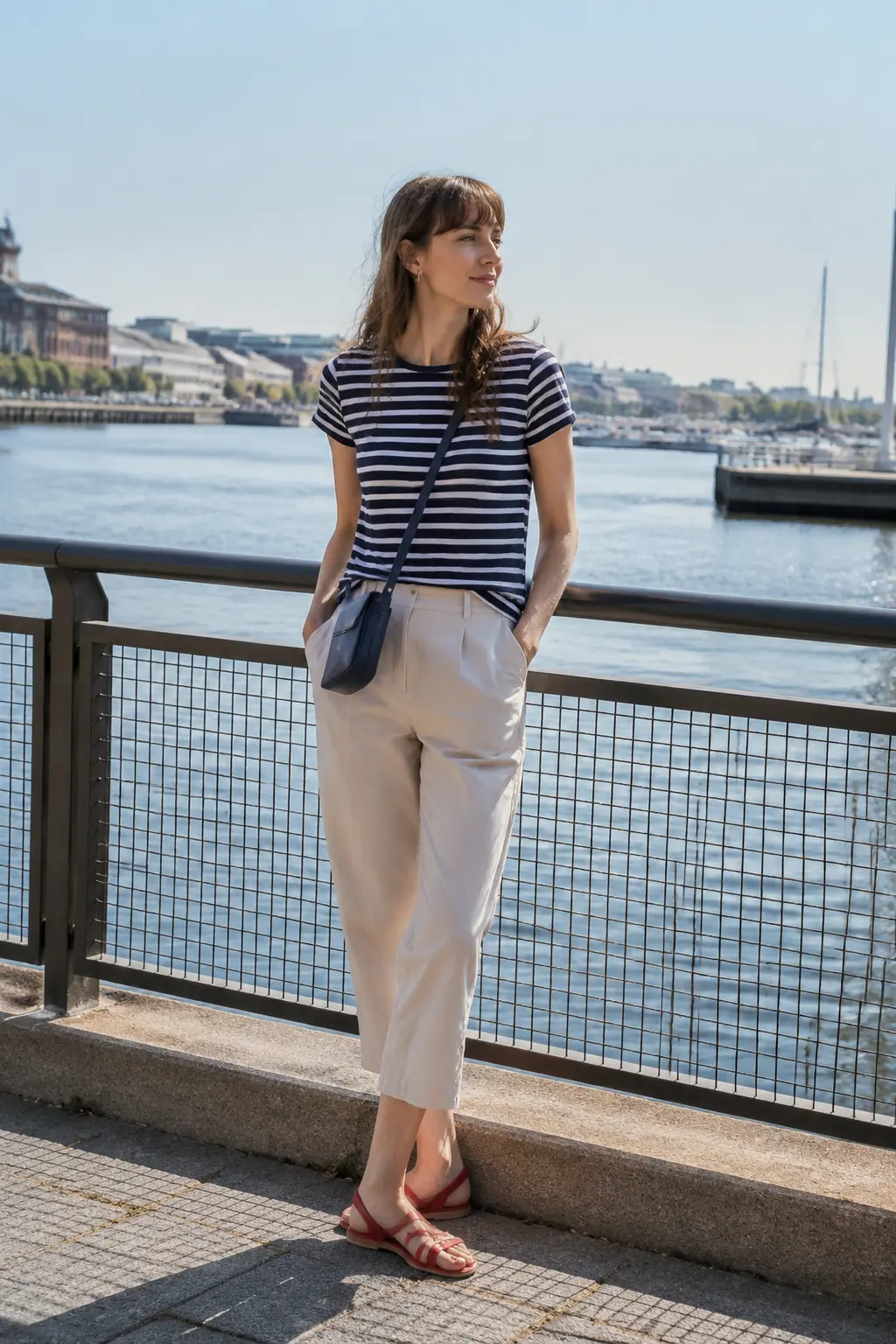
A striped top adds pattern while remaining easy to combine with solid pieces. Navy and white stripes pair with beige, denim, olive, and navy bottoms, making them practical for a small wardrobe.
Keep the rest of the outfit simple, then use one small accent color through sandals, a scarf, or a bag. Red, yellow, or green can add personality without requiring another patterned garment.
Choose stripe scale according to your preference, not a body rule. Fine stripes feel quieter, while broad stripes create a stronger graphic effect. Either can work in a relaxed tee, boat-neck top, or loose long-sleeve shirt.
Secondhand striped tops are common, and a slightly oversized one can be shortened or tucked. Wear it with cropped trousers for a neat daytime look or denim shorts for weekends. Add a lightweight cardigan if the evening becomes cooler.
13. Keep One Black Summer Dress
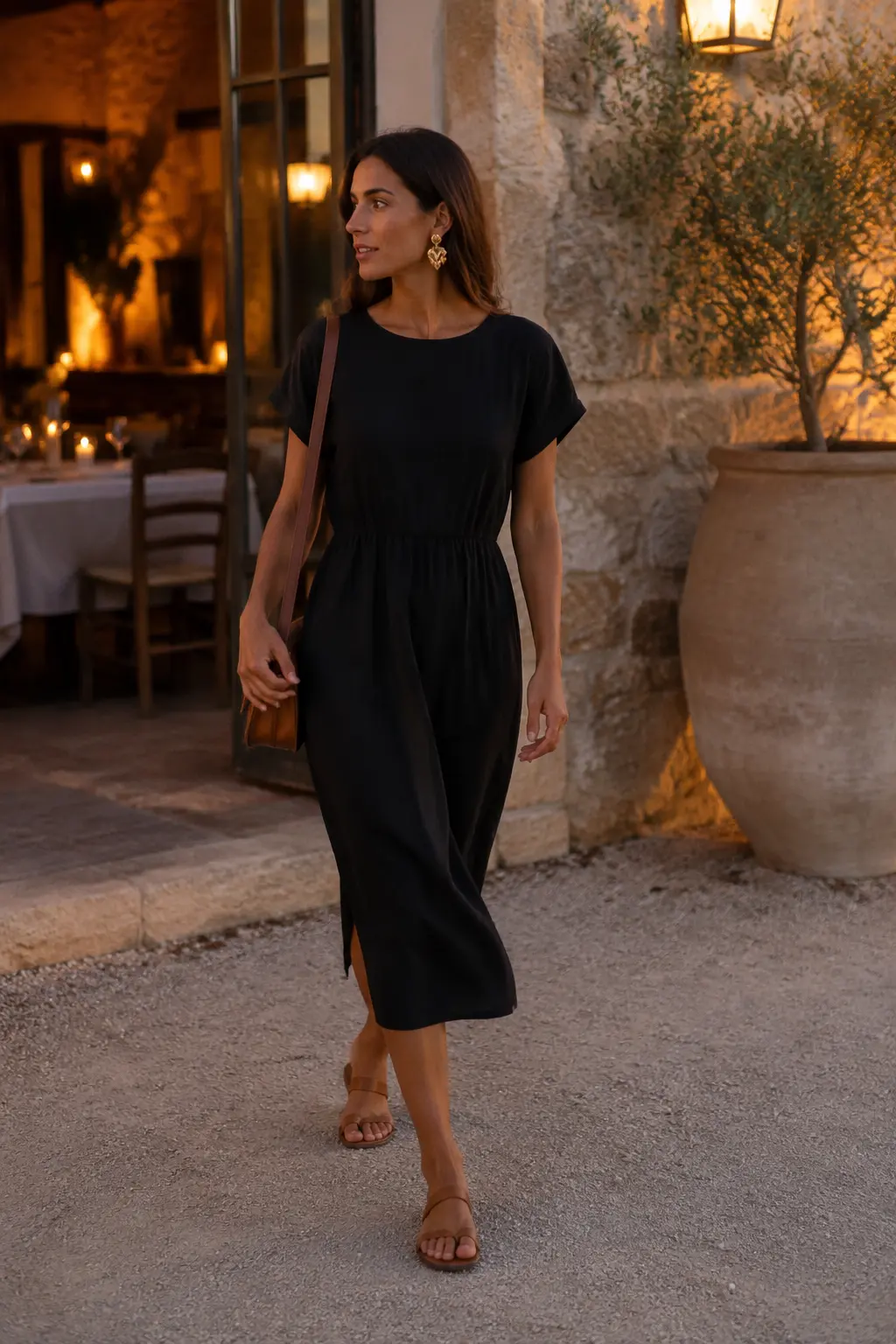
A simple black summer dress covers dinners, work events, and days when you want one easy garment. Linen, cotton, or lightweight viscose keeps the dark color comfortable in warm weather.
Choose a neckline, sleeve, and length that suit your routine. A loose shift feels relaxed, while a softly defined waist can look a little more formal without becoming restrictive.
Tan accessories lighten the outfit for daytime. Black flats and a structured bag make it office-ready, while metallic earrings and a small shoulder bag suit an evening meal.
If black is not a favorite, use navy, chocolate, or deep olive as your dark dress. Search secondhand for a simple shape and adjust the hem or waist if needed. A white linen shirt worn open over the dress adds sun coverage and creates another outfit from two capsule pieces.
14. Add One Soft Accent Color
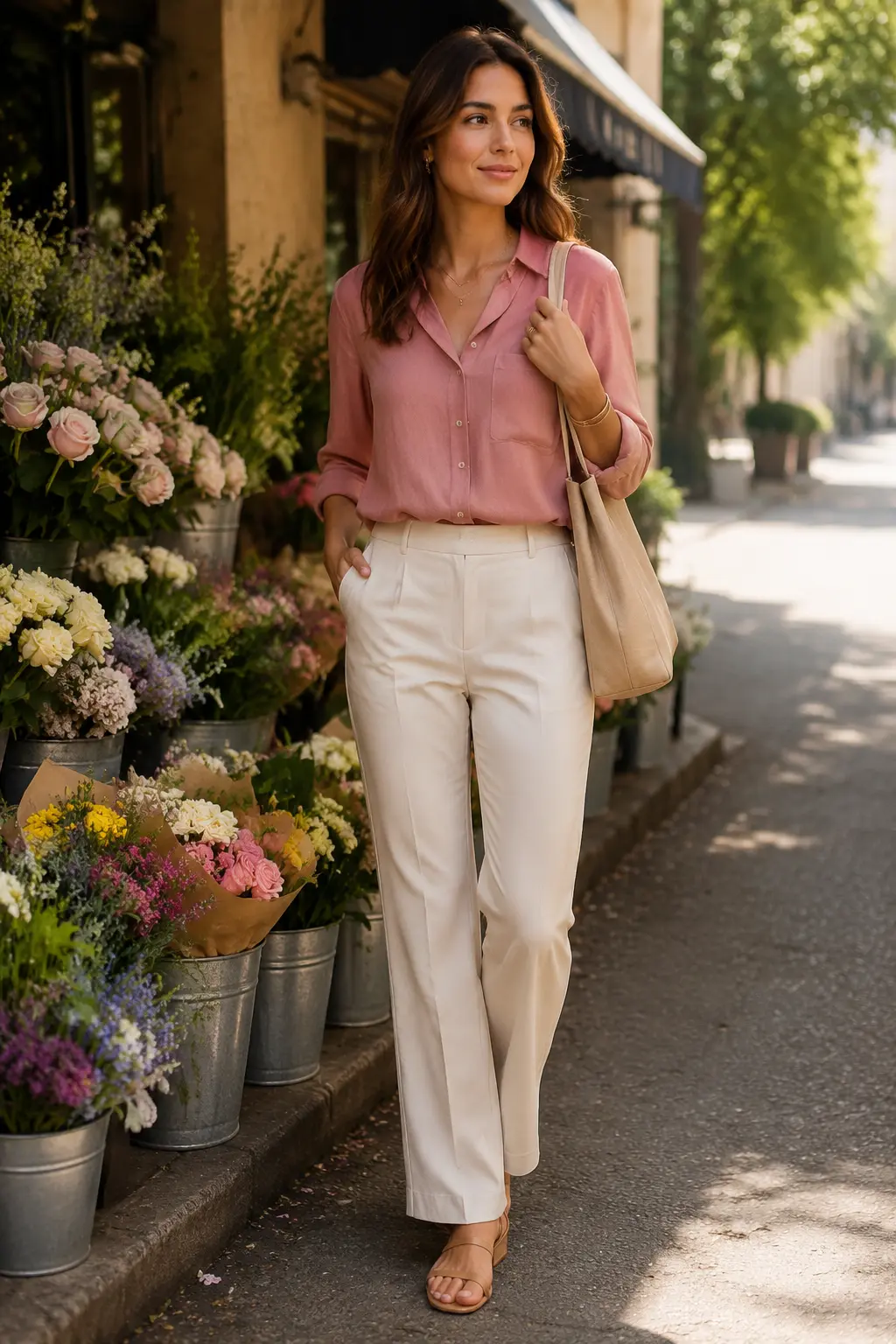
One accent color prevents a neutral capsule from feeling repetitive. Choose a shade you already enjoy wearing, such as dusty rose, sky blue, sage, rust, or butter yellow.
Use the color on a top first because it can pair with several neutral bottoms. A rose blouse, for example, works with cream trousers, navy shorts, and light denim.
Repeat the shade lightly through a scarf, earring, or bag only if you like coordinated details. There is no requirement to match every accessory.
An existing colorful garment is the best starting point. If it rarely gets worn, test whether the fit or fabric is the problem before adding another item in the same color. For a low-cost update, dye a pale cotton shirt following the product instructions, or swap clothing with a friend. Keep shoes neutral so the accent remains easy to style.
15. Use a Lightweight Cardigan for Cool Evenings
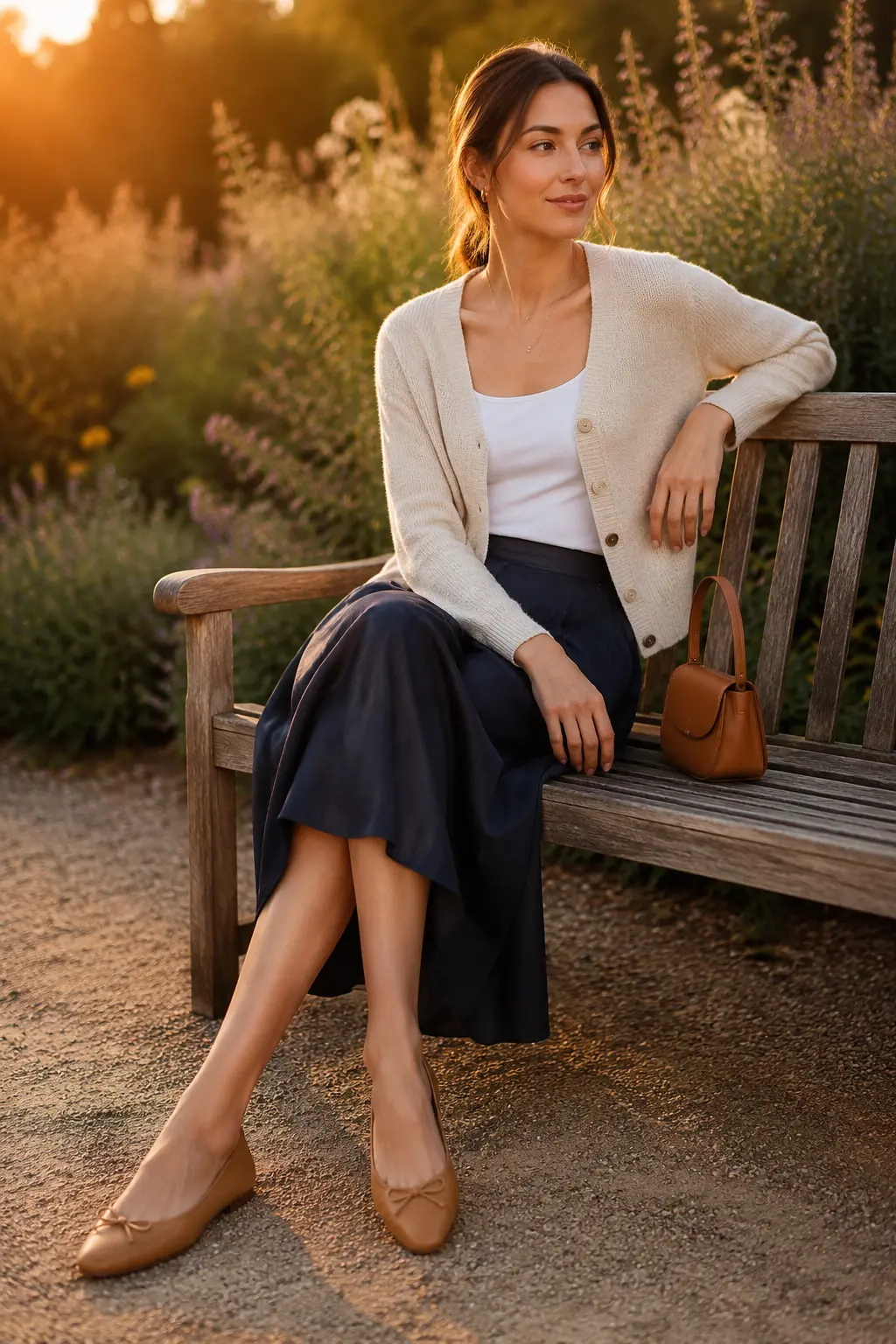
A lightweight cardigan is useful for evening breezes, strong air conditioning, and unpredictable weather. Fine cotton, linen knit, or a light viscose mix can fold into a tote without taking much space.
Oatmeal, navy, soft gray, or cream will work over most capsule colors. Check that the sleeves and shoulders fit comfortably over your common tops and dresses.
Wear it buttoned with a skirt, open over a tank and trousers, or draped around the shoulders until the temperature drops. A slightly cropped cardigan pairs well with high-waisted bottoms, while a longer style gives more coverage.
If you already own a cardigan that feels dated, replace heavy buttons with simple ones or remove fabric pills carefully. A thin crew-neck sweater can serve the same role. Keep the layer clean and ready near your everyday bag so it becomes part of the capsule rather than a forgotten backup.
16. Add a Modest Tunic-and-Trouser Combination
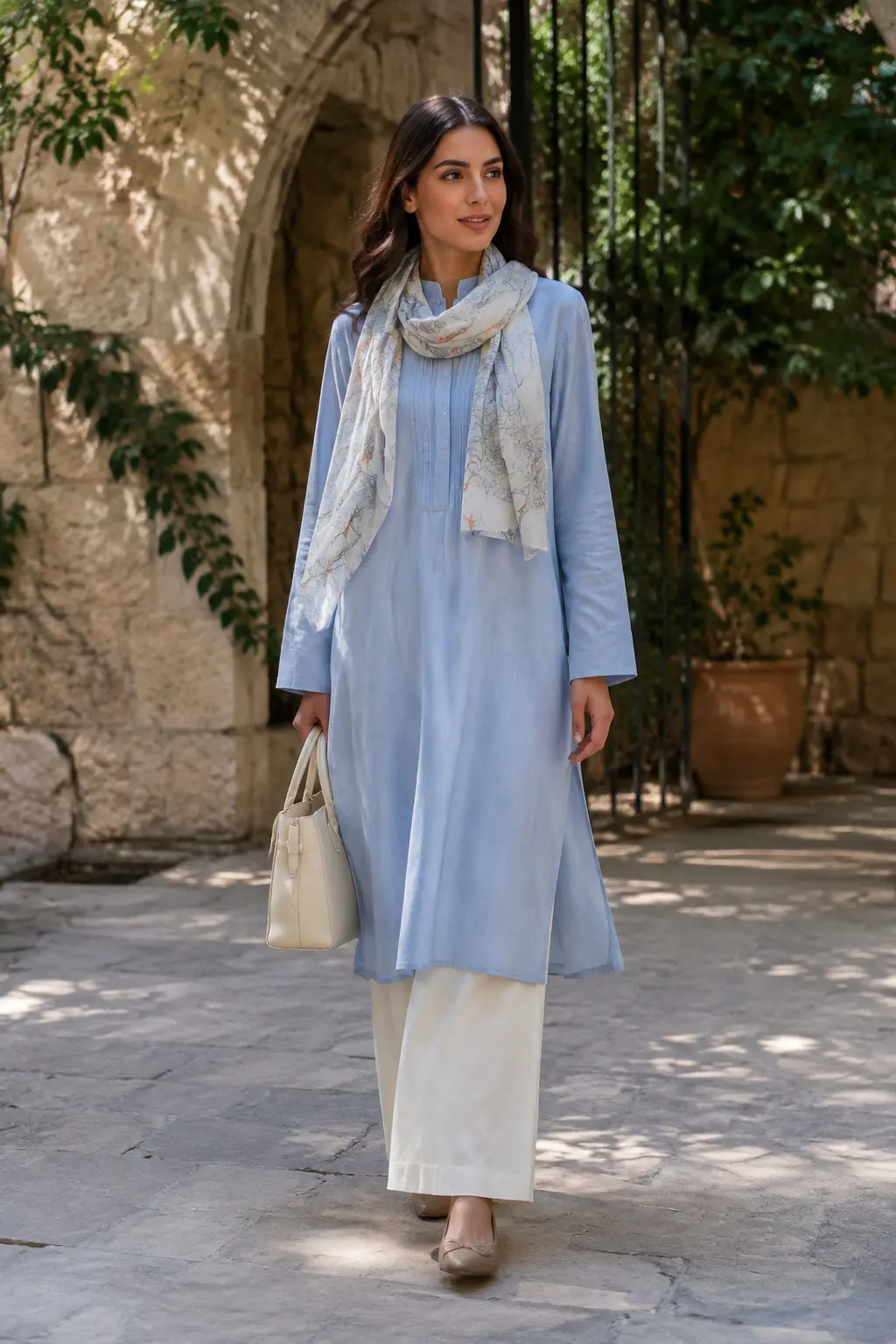
A long cotton tunic with wide-leg trousers offers breathable coverage and a clean summer silhouette. Choose light fabrics that move separately so the layers do not feel heavy.
Soft blue with ivory looks calm, while olive with cream or navy with beige creates deeper contrast. Side slits can improve movement, provided they sit at a comfortable height for you.
Keep the trouser waistband smooth under the tunic and choose sleeves that fit your climate. A light scarf can add coverage or color, while closed flats make the outfit useful for work and community events.
You can recreate the combination with a long shirt already in your wardrobe. If the shirt feels too boxy, a tailor can narrow the side seams or adjust the sleeve. Matching is optional. Coordinated but different shades often make the outfit easier to separate and wear again.
17. Make a Slip Skirt Work for Daytime
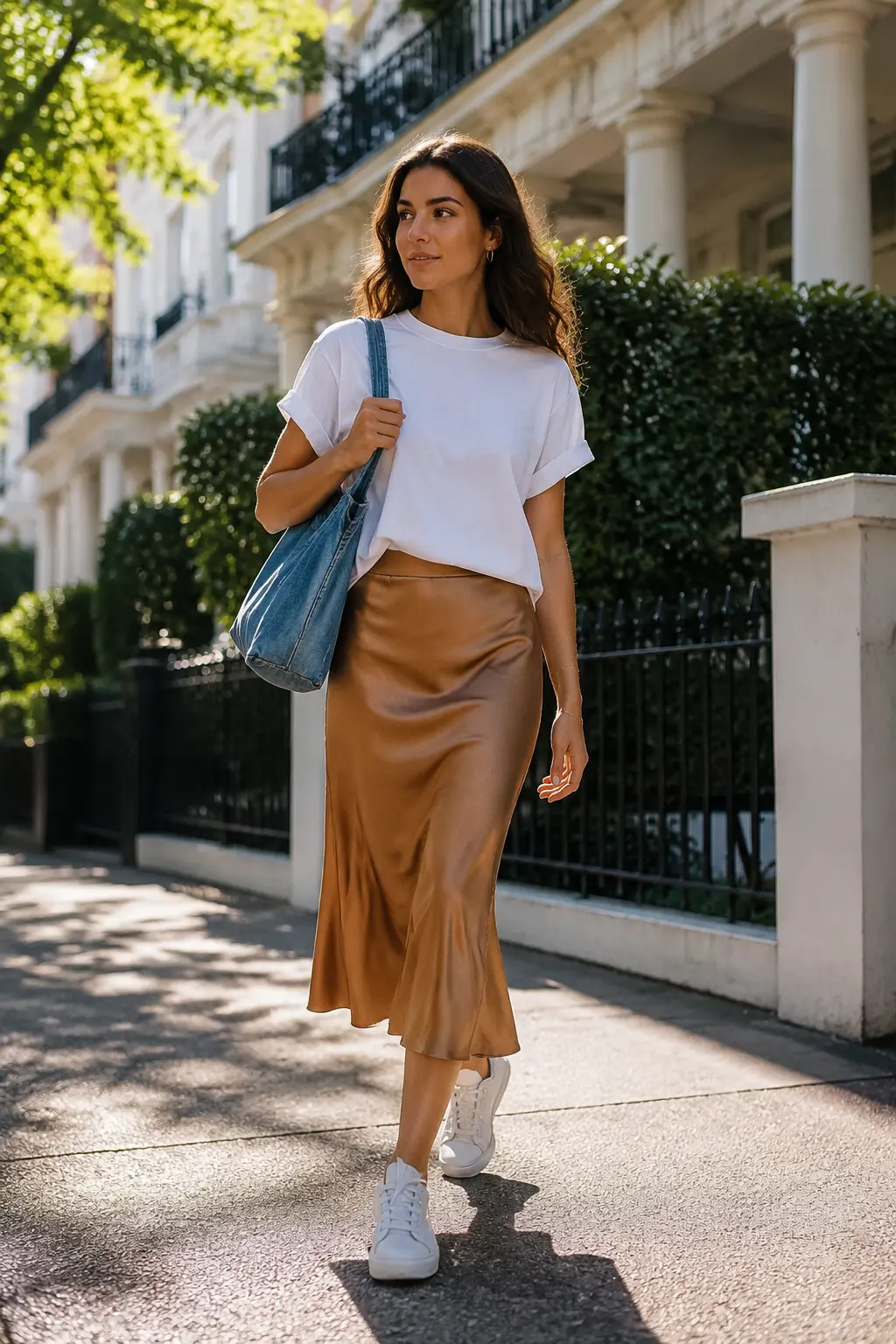
A slip skirt can move beyond evening wear when paired with simple cotton basics. A white tee and trainers reduce the formality, while a linen shirt and flat sandals create a softer daytime outfit.
Choose a skirt with comfortable lining and enough room for walking. Bronze, navy, olive, and black combine easily with neutral tops.
If the waistband is visible through a fitted shirt, use a relaxed tee with a small front tuck or leave it loose. A longer overshirt can add coverage and reduce cling.
Secondhand skirts may have damaged elastic even when the fabric is good. Replacing the waistband can make the piece wearable again for less than buying new. For work, add a sleeveless knit and lightweight blazer. For weekends, wear the skirt with trainers and a canvas tote.
18. Choose Three Shoes That Cover Most Plans
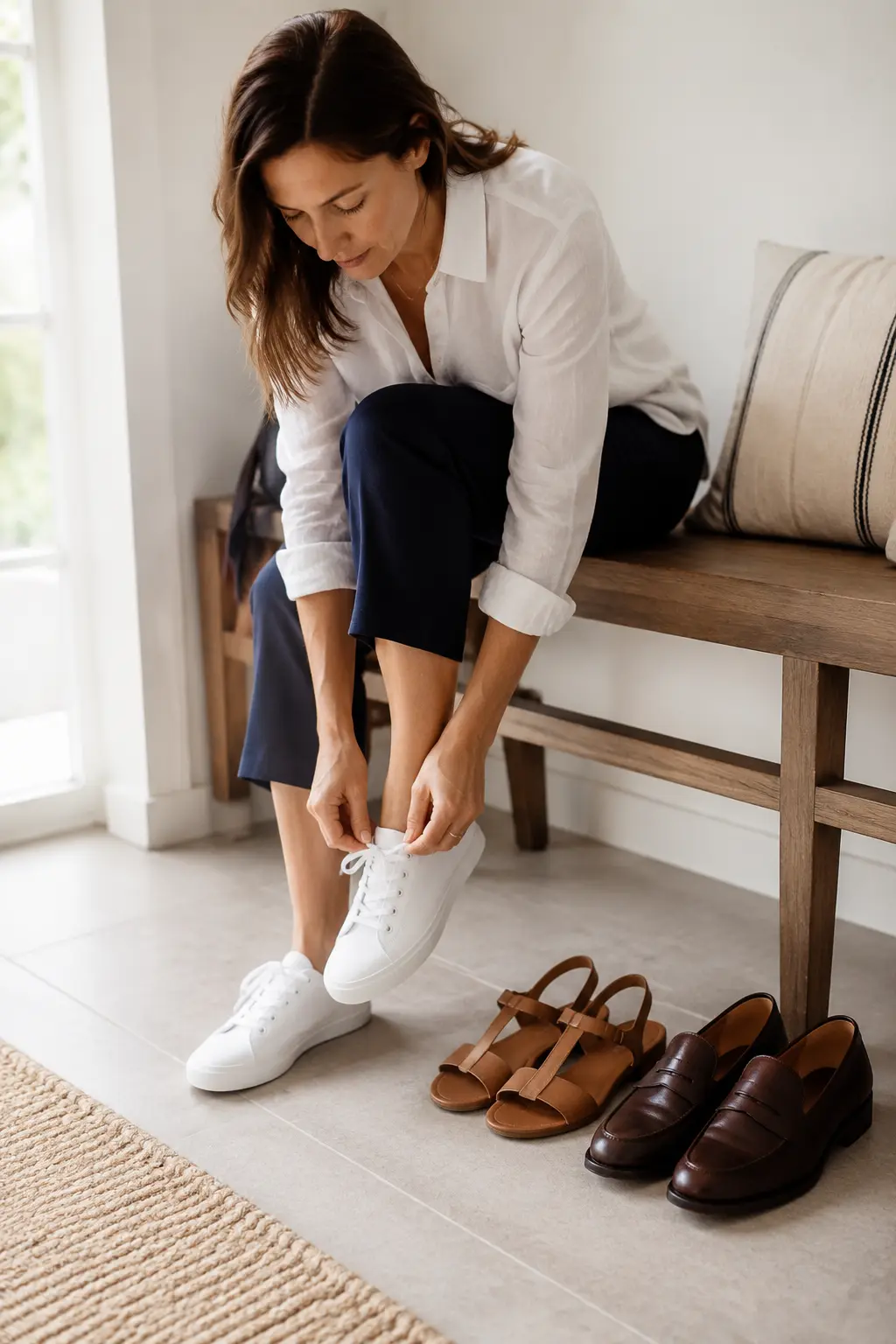
Three well-chosen shoes can cover most summer plans: a comfortable sandal, a walking trainer, and a polished flat or loafer. The exact categories can change according to your work, climate, and mobility preferences.
Choose colors that repeat across your bags and belts. Tan, white, black, navy, and dark brown are easy to coordinate, but comfort should guide the final choice.
Wear every pair around the house before relying on it for a long day. Check straps, heel movement, toe room, and how the sole feels on hard surfaces.
Repairing a worn heel or adding an insole may extend the life of shoes you already own. Clean trainers and condition leather regularly. If open sandals are unsuitable, replace them with breathable woven flats or closed fisherman shoes. The goal is coverage across activities, not ownership of a particular style.
19. Let Accessories Change Repeated Outfits
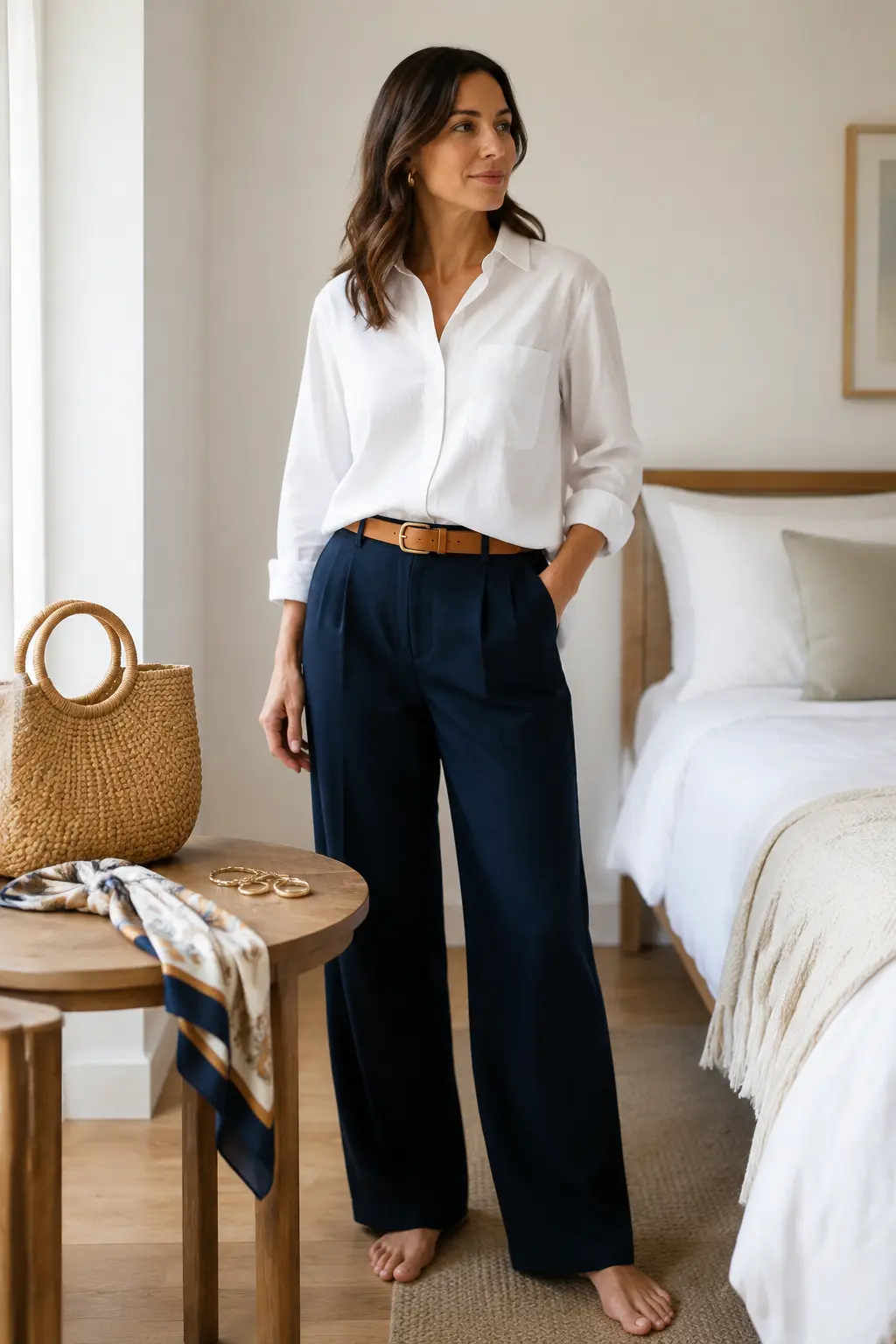
Accessories can change repeated basics without taking much wardrobe space. A belt, scarf, earrings, and one or two bags can move the same shirt-and-trouser outfit from work to a relaxed weekend.
Choose accessories that connect with your clothing palette. A tan belt and bag work with cream, navy, denim, olive, and rust, while simple metal jewelry suits both casual and polished outfits.
Avoid collecting pieces that are attractive but uncomfortable. Heavy earrings, stiff belts, or impractical bags will not help if you rarely wear them.
Use a scarf around the neck, on a bag handle, or as a light hair accessory. Thrifted scarves and belts can add color at a modest cost, and bag straps can sometimes be replaced instead of buying another bag. Store the options where you can see them when dressing.
20. Build a Seven-Day Outfit Rotation
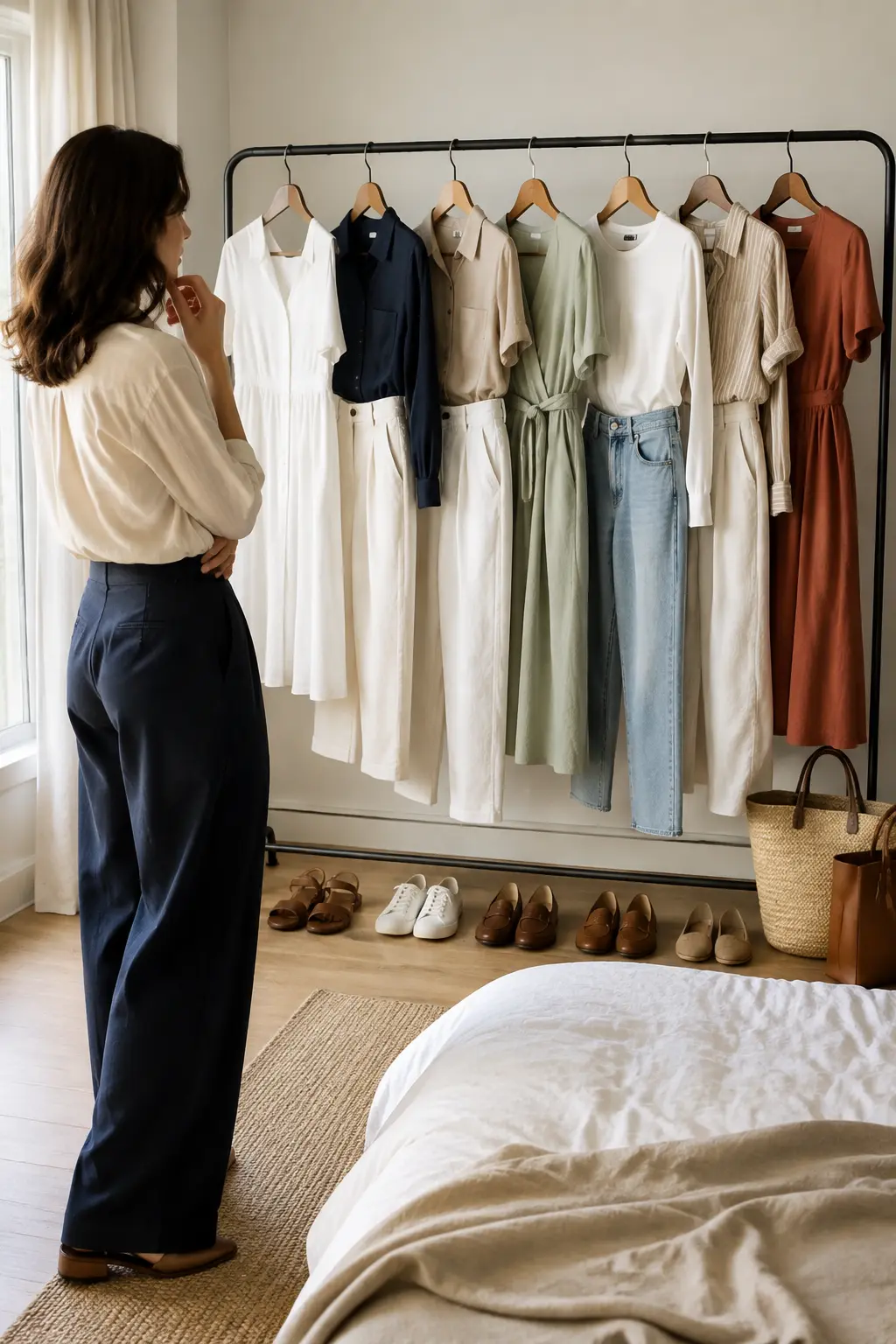
A seven-day outfit rotation helps you test whether the capsule supports your real schedule. Lay out combinations for work, errands, social plans, and a relaxed day, then check where the same pieces repeat.
Aim for practical variety rather than seven completely different outfits. One white shirt might appear with trousers, open over a dress, and tied above a skirt.
Photograph each combination on your phone so you can repeat it quickly. Wear the rotation for a week and note any problems with comfort, weather, laundry, or footwear.
Do not shop immediately when a gap appears. Try a substitute, restyle another garment, or adjust the weekly plan first. After the test, add only an item that solves a repeated problem. This approach keeps the summer capsule wardrobe connected to daily life instead of an idealized checklist.
Conclusion
A useful summer capsule wardrobe is built from breathable pieces that work across several outfits, not from a fixed shopping list. Begin with neutral foundations, then add a few garments that suit your weather, schedule, coverage preferences, and favorite colors.
Use what you already own before filling gaps. A linen shirt, comfortable trousers, simple dress, light layer, and dependable shoes can often create more combinations than expected. Small alterations, secondhand finds, and thoughtful accessories can expand those options without rebuilding your closet.
Choose one idea from this list and create three outfits around it this week. Save the article, or pin your favorite look, so the combinations are easy to revisit when summer dressing starts to feel repetitive.